
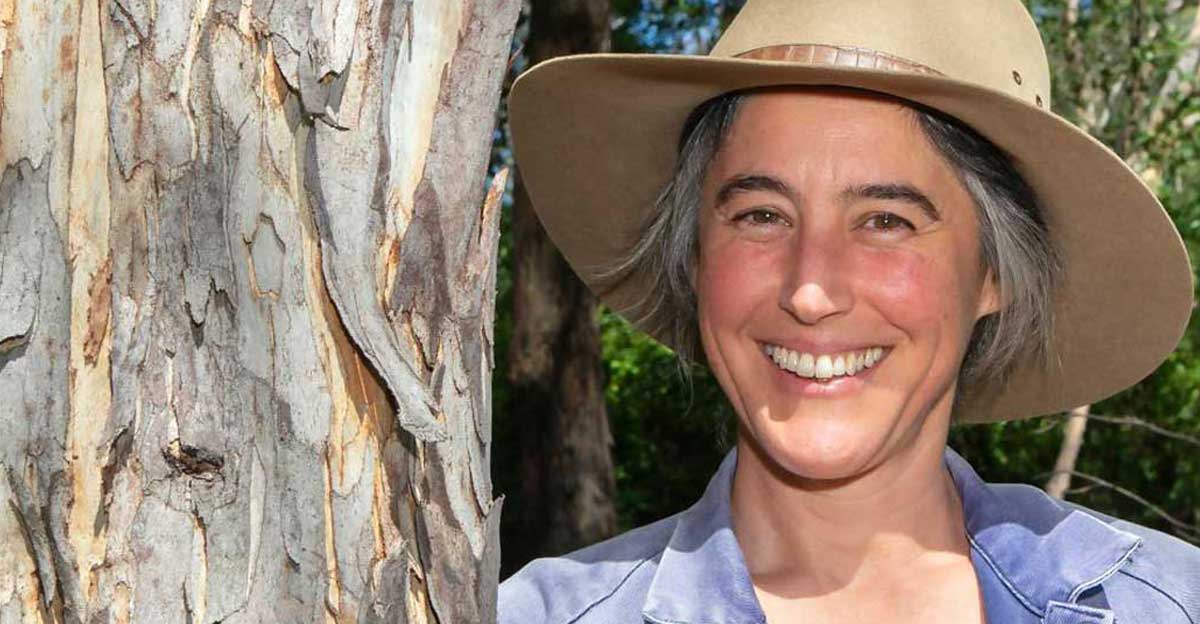
Annual General Meeting
Save the date. The WCA AGM will be held on Thursday October 15th, 2026, at 6:45pm
Venue: the Community Hall, Neighbourhood House, Warrandyte Community Centre, 168-178 Yarra Street, Warrandyte.
The ordinary business of the annual general meeting is as follows –
1. to confirm the minutes of the previous annual general meeting and of any special general meeting held since then;
2. to receive and consider –
(i) the annual report of the Committee on the activities of the Association during the preceding financial year; and
(ii) the financial statements of the Association for the preceding financial year submitted by the Committee in accordance with Part 7 of the Act;
3. to elect the members of the Committee;
4. to confirm or vary the amounts (if any) of the annual subscription and joining fee.
The annual general meeting may also conduct any other business of which notice has been given in accordance with these Rules.
Downloads
WCA committee nomination form
AGM minutes
Notice of AGM to members
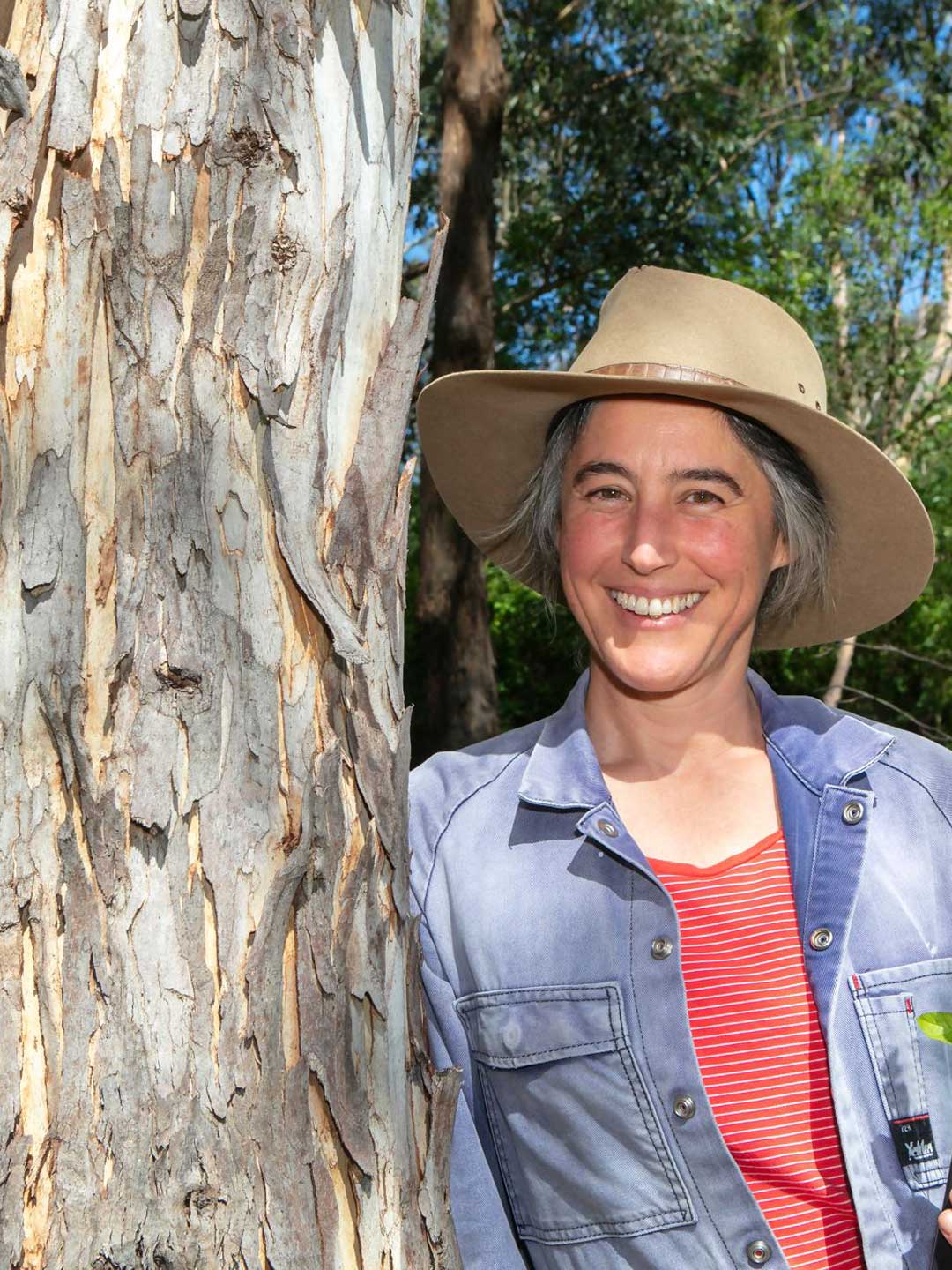
AGM Guest Speaker, Vicky Shukuroglou
Thursday October 15th, 2026, 7:30-9:00pm
Venue: the Community Hall, Neighbourhood House, Warrandyte Community Centre, 168-178 Yarra Street, Warrandyte.
Guest speaker, Vicky Shukuroglou, will talk about Maintaining biodiversity and habitat in the face of urban development.
Vicky is an inspiring local environmental activist, author, artist and educator, will share her experience of improving biodiversity locally through the Hohnes Hill Reserve Friends Group, the Great Southern BioBlitz, ecological restoration and more.
Powerful Owl Seminar
The WCA is partnering with Manningham council to present a number of environmental seminars in Warrandyte, starting this October.
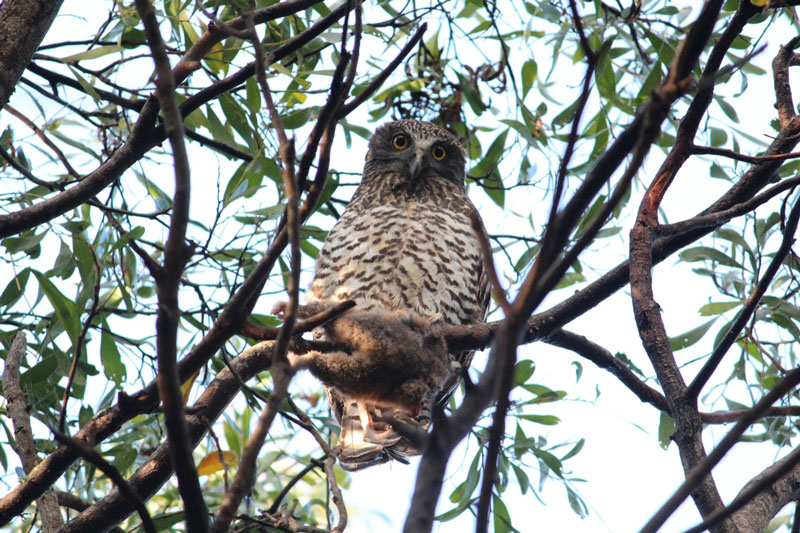
NIGHT PREDATOR: Protecting Powerful Owls in the Wilds of Warrandyte
While we sleep, one of Australia’s most powerful predators – the Powerful Owl – takes flight above us. Across bushland. Over roads. Hunting through the night around our homes and gardens.
We are lucky to have Powerful Owls living so close. But these magnificent birds are vulnerable. Their future is closely tied to the future of places like Warrandyte. They need old-growth trees, connected bushland and healthy populations of the animals they hunt — the very things that make our local area such a remarkable environment and a very special place to live.
As our landscape changes and development puts increasing pressure on habitat, protecting these extraordinary predators means protecting the living web of Country we share with them.
Join Warrandyte Community Association members and friends at a free evening event – the first in a new community environment series presented in partnership with Manningham Council – to discover how we can all help support real conservation outcomes for Powerful Owls and urban biodiversity.
Featuring an engaging presentation by experienced ecologist and Powerful Owl specialist Dr Nick Carter, this event is for everyone – whether you’re a citizen scientist, bird watcher, night-sky lover or simply nature curious!
Using GPS tracking data collected from Powerful Owls across Victoria’s urban, rural and forest landscapes (including Warrandyte), Nick will share highlights from his fascinating research into how Powerful Owls are navigating an increasingly fragmented habitat, uncovering how they interact with human-modified landscapes and roads – and revealing an unexpected surprising new chemical threat impacting the species.
Come curious. Leave connected. Love Warrandyte.
Thursday 29 October 2026 | 7–8.30pm.
Warrandyte Community Church, 57 Yarra St, Warrandyte
Free | Bookings essential via Eventbrite: The Powerful Owl presented by Dr Nick Carter
Keep exploring our local wild side
Want to take the conversation outdoors? For an opportunity to explore our birdlife in the field, discover more about the species that share our local environment, join Dr Nick Carter for a guided bird walk.
Friday 30 October 2026 | 9:30am-12noon
Westerfolds Park (Porter Street Picnic Area), Templestowe
Free | Bookings essential via Eventbrite: Guided Bird Walk with Dr Nick Carter
Dr Nick Carter is an experienced ecologist and researcher who has spent years studying these elusive apex predators as part of Deakin University’s Powerful Owl Research Team. His research has been published in peer-reviewed journals including Landscape and Urban Planning, Science of the Total Environment and Global Ecology and Conservation. He has presented his research at conservation forums around Australia and at the 2025 Raptor Research Foundation conference in Costa Rica.
Update on Over-mowing of High Conservation Roadside Vegetation
The WCA is concerned about the loss of Warrandyte’s unique roadside vegetation, and has lobbied Manningham Council regarding the over use of side-arm mowers in the High Conservation areas. Council officers have listened and are addressing the problem.
High conservation areas have a low weed level and high level of indigenous plants. They are disappearing in the municipality and need special protection. They generally have the less common species of wildflowers such as orchids, lilies, herbs, daisies, peas and low growing wattles. Only a few roadsides in Manningham are high conservation, and the Council is acting to protect them.
Manningham Council has just received its first order of ‘no mowing’ signs which will be erected on metal pickets signposting the two ends of high conservation roadsides. For almost all roads with high conservation sections, only short sections of the road are medium or high conservation, not the whole length. The signs are quite small, about 20cm high and 15cm wide, with this wording:
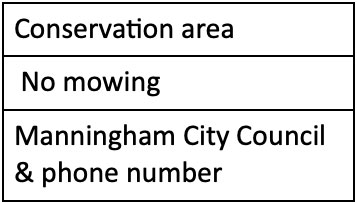
Where the designated ‘no mow’ section is long, an additional sign will be used part way along.
Melissa Carmody, Manningham Council’s Senior Biodiversity Officer, admitted that “the ‘No mow’ wording is slightly ambiguous as mowing with smaller machinery such as brush cutters or even delayed side arm mowing will occur so that fuel management expectations are met”. It is tricky to use the minimum wording but cover all intents! The method and timing of this ‘conservation’ mowing will depend on the specifics of a particular roadside section.
Coincidentally, High Conservation vegetation almost always has a LOWER biomass than lower value conservation vegetation. That is, the amount of thick and grassy vegetation contained is much less than for lower value conservation roadsides.
STOP PRESS – two roadsides at least have just been signed, one being the roadside WCA wrote to council about – the short section of Pound roadside where it abuts Diane reserve.
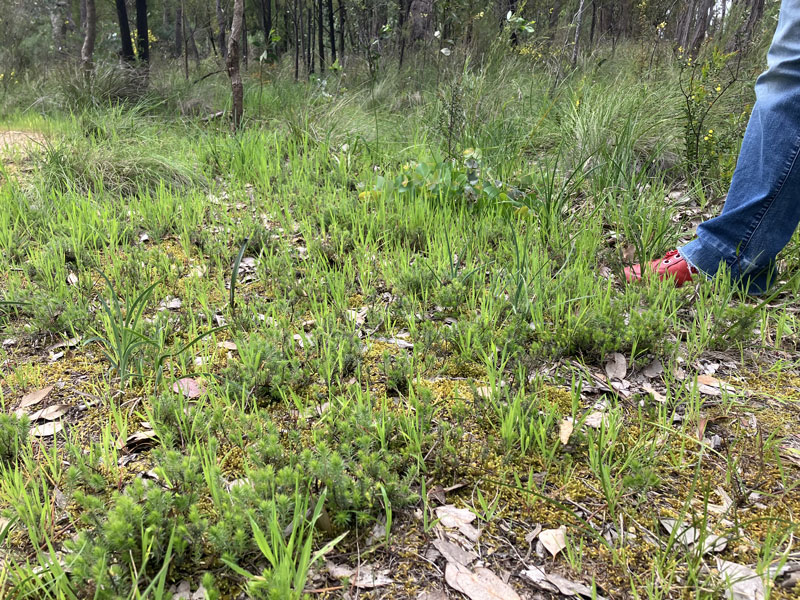
Above: Showing the recent regrowth of one old Honey Pots plant (Acrotriche serrulata), a low ground hugging woody plant that was on track to be knocked out by the prior frequency of council’s side arm mowing. Honey Pots is slow growing and not particularly common.
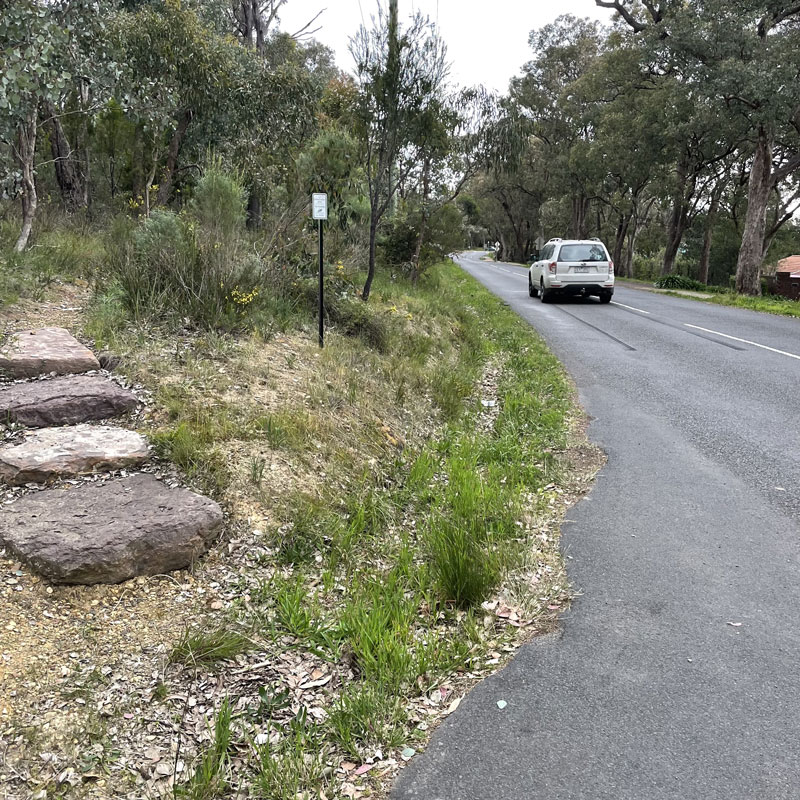
Above: A recently erected ‘no mow’ sign
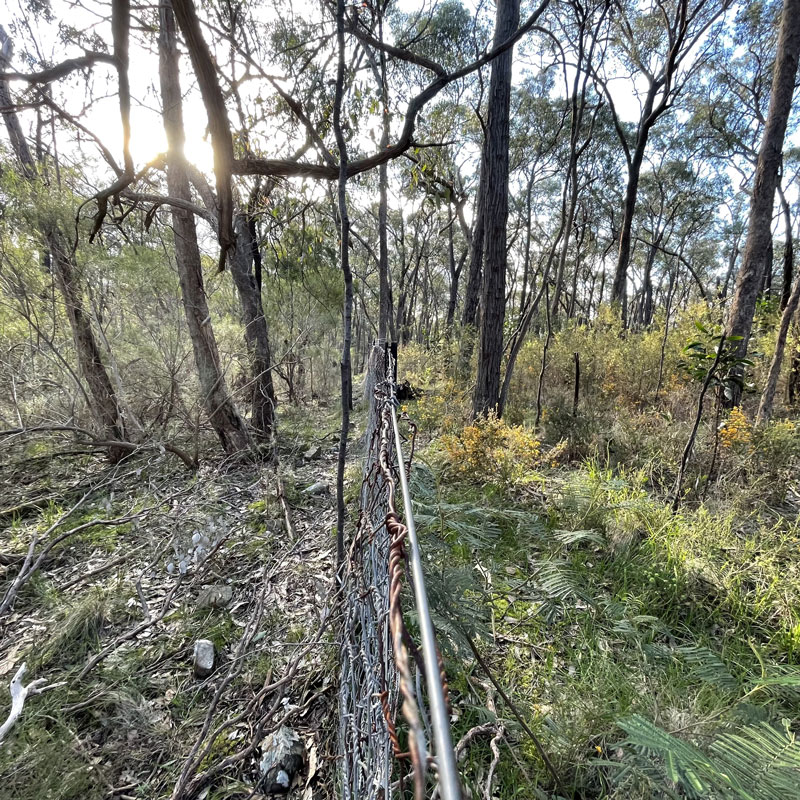
Above: The spectacular spring flowering in this small special fenced area in 4th Hill reserve, part of the Warrandyte State Park. The fence stops wallaby and deer grazing in particular. A control-burn and removal of some selective removal of common woody shrubs, such as Cassinia and Kunzea, have also occurred. While the removal of these species is justifiable, it can be tricky to explain and needs to be well thought through.
Warrandyte Riverside Market Business Awards Finalist
The Warrandyte Riverside Market has been nominated for the Manningham Business of the Year. It is a finalist in the category which recognises businesses that create positive community benefits through volunteering, sponsorship or sustainable practices. The awards will be announced on 22nd October. The Warrandyte Community Association is a member of the Committee of Management for the market. WCA members organise and staff the “bump out” at the market each month. The also help the emergency management and risk management of the market. Thank you to all of our volunteers.
Planning – 35A Everard Drive
Warrandyte is often characterised as a “leafy, lower density township with great heritage and recreation value”. For 25 years our Association has advocated for sensitive development within this treasured locality, also having regard to community welfare. The WCA recently lodged an objection to amended plans for a new residence at 35A Everard Drive.
This objection was made in the context of two of our Objectives, being to:
Defend the character and heritage of the Township.
Protect the environment and encourage restoration and regeneration of native flora and fauna.
The site is a “battle-axe bock” subdivided off the rear of a dwelling overlooking the Yarra which was sold in August last year with a permit to build a modest 2 storey house attached. The WCA considered objecting to the subdivision but decided that even for this sensitive locality we would be unlikely to succeed in persuading Council to refuse a permit, let alone win at VCAT, as it was allowed under the Planning laws.
The new owner recently lodged revised plans for a much larger house with 2 story sheer walls and high site coverage, which will allow minimal vegetation. It does not fit with the neighbourhood character of the area. There are also overlook and privacy concerns. The WCA has objected to this proposal based on its poor response to neighbourhood character and overlay planning controls.
Local participation in the planning process is compromised by a series of planning amendments implemented by the State Government to intensely prescribe conditions to be met to receive a planning permit, partly to cut the VCAT backlog but also to “cut red tape”. While these have merit the changes have by-passed Council’s previous role in “conserving local character”. This prescriptive approach has a larger context – how the State taking over planning by declaring Activity Centres and how communities such as ours have lost a once significant Voice.
Bev Hanson, local landscape architect and founding member of the Warrandyte Environment League, commented on this application. “It is out of character with Warrandyte. I am seeing more of these developments where the residence covers a significant part of the block, leaving no room for plants. They are often on steep blocks which require deep cuts into the hill, removal of fill and top-soil and large excavations to accommodate underground garages”. “The rest of the block is covered with concrete driveways, turnaround areas and parking. The hard surfaces exacerbate drainage issues for the neighbours below and create ecological deserts.”
Bev added “Landscaping can enhance a house and make an ordinary house look spectacular. It is impossible to ameliorate the visual impact of these large houses with a few rocks, some ground cover and a trophy tree. At particular risk is the “middle bush”. “These are the bushy plants that support insects which the birds feed on. They provide protection for the little birds such as pardalotes and wrens.”